

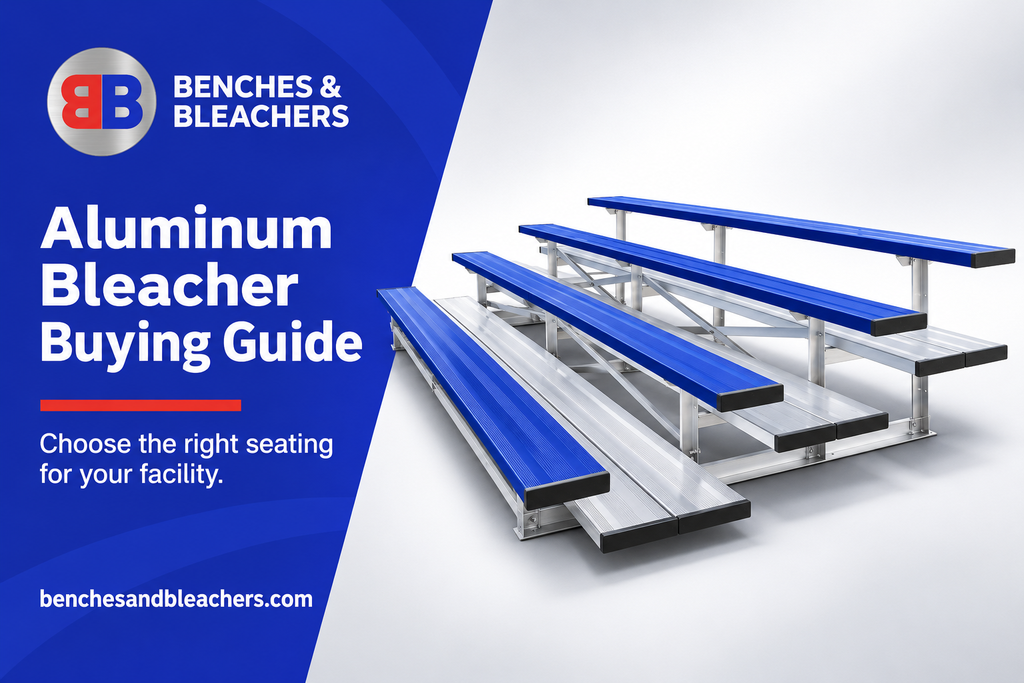
To choose aluminum bleachers, start with how many spectators you need to seat, the space available, and whether the seating will stay in place or move. Then compare safety features, accessibility, installation requirements, and the total delivered cost.
At Benches & Bleachers, we help schools, parks, sports facilities, and event venues choose USA-made aluminum seating. Use these answers to narrow your options before requesting a quote.
What type of bleachers should I buy?
Start with how your facility will use the seating.
| Bleacher type | When to consider it | What to compare |
|---|---|---|
| Low-rise bleachers | Smaller seating areas where a lower overall height matters | Seat heights, capacity, and overall dimensions |
| Standard-rise bleachers | Facilities looking for a conventional tiered seating layout | Row count, height, and required safety features |
| Tip and roll bleachers | Facilities that need to move or store seating | Moving surface, storage space, and handling instructions |
| Bleachers with safety fencing | Seating layouts that need perimeter guardrails | Chain link or vertical picket options and local requirements |
Portable seating still needs a suitable setup area. Confirm that the model is designed for your intended location and method of moving it.
Browse small park portable bleachers or bleachers with safety fencing.
How many people can aluminum bleachers seat?
Capacity depends on the exact model, row count, and seat length. Check the listed capacity rather than choosing by length alone.
For example, our USA Series 4 Row Low Rise Bleachers list these capacities:
| Seat length | Listed seating capacity |
|---|---|
| 7.5 feet | 20 people |
| 15 feet | 40 people |
| 21 feet | 56 people |
| 27 feet | 72 people |
These figures apply to this model. Aisles, accessible seating, and other layout changes can affect the final seating plan.
Plan for your usual attendance and tell us if tournaments or special events bring larger crowds.
How much do aluminum bleachers cost?
Bleacher pricing depends on size, frame construction, footboards, finishes, safety features, and delivery location. Request a quote for the configuration you need.
For a useful budget, ask what is included in each of these areas:
- Bleacher seating and required safety components
- Freight and unloading arrangements
- Assembly and installation
- Ground preparation and anchoring
- Accessible seating and access routes
Comparing the full project cost helps you avoid choosing a lower equipment price that leaves necessary work out of the budget.
How much space do bleachers need?
Measure the available width and depth, then allow room for access, exits, and accessible routes. The bleacher’s footprint is only part of the space needed.
Also note nearby fences, buildings, walkways, and anything that could block the view. For portable bleachers, measure the route to storage and the storage area too.
Send your measurements and a few site photos when asking for help selecting a model.
What is the difference between single and double footboards?
Single footboards provide one plank for spectators’ feet. Double footboards use two planks to provide a wider foot area. Compare the actual dimensions on each model.
A riser plank is different: it closes the vertical opening between rows. Ask which footboards and risers are included in your quote.
Do bleachers need guardrails or safety fencing?
Guardrail requirements depend on the bleacher’s height, design, and applicable local codes. Row count alone does not determine which safety features are required.
Before ordering, have the proposed model and layout reviewed for your location. Ask about guardrails, handrails, aisles, and openings between seating components. A low-rise label does not replace that review.
We offer metal bleachers with safety fencing, including chain link and vertical picket options.
What should I know about ADA-accessible bleacher seating?
Plan accessibility as part of the complete seating area. Depending on the project, this includes wheelchair spaces, companion seats, accessible routes, and suitable views of the activity.
Adding a ramp alone does not establish compliance. Ground-level seating also needs accessibility planning. Have your facility’s designer or accessibility professional confirm the layout and applicable requirements before purchase.
Do aluminum bleachers need a concrete pad?
Confirm the foundation and anchoring requirements for the specific model before preparing the site. Do not assume every bleacher can sit directly on grass or requires the same concrete pad.
Tell us whether your proposed area is concrete, asphalt, gravel, or grass. Request the manufacturer’s installation instructions and have your installer confirm the required site preparation.
Are aluminum bleachers good for outdoor use?
Aluminum bleachers are a common choice for outdoor spectator seating because aluminum resists corrosion and does not rot like wood. Choose a model intended for outdoor use.
They still need maintenance. Follow the manufacturer’s cleaning instructions and arrange regular inspections of planks, fasteners, supports, and safety rails. Repair problems before returning affected seating to use.
What should I confirm about assembly and delivery?
Before ordering, ask whether the bleachers arrive assembled or require assembly, who will install them, and what equipment is needed to unload the shipment.
Provide your delivery address, site access details, and required event date. Ask for the current lead time and confirm delivery arrangements before scheduling installation.
Get Help Choosing Your Aluminum Bleachers
Tell us your expected spectator count, available space, delivery ZIP code, and whether you need portable seating. Include any project drawings or requirements you already have.
Browse our aluminum bleachers for sale, select a product’s options, and click Add to Quote. Then open My Quote List to submit your request.
Need help first? Call 770-487-9798 or Email Us